
Monsoon Storm Damage in Las Vegas: How Wind-Driven Rain Gets Into Your Home
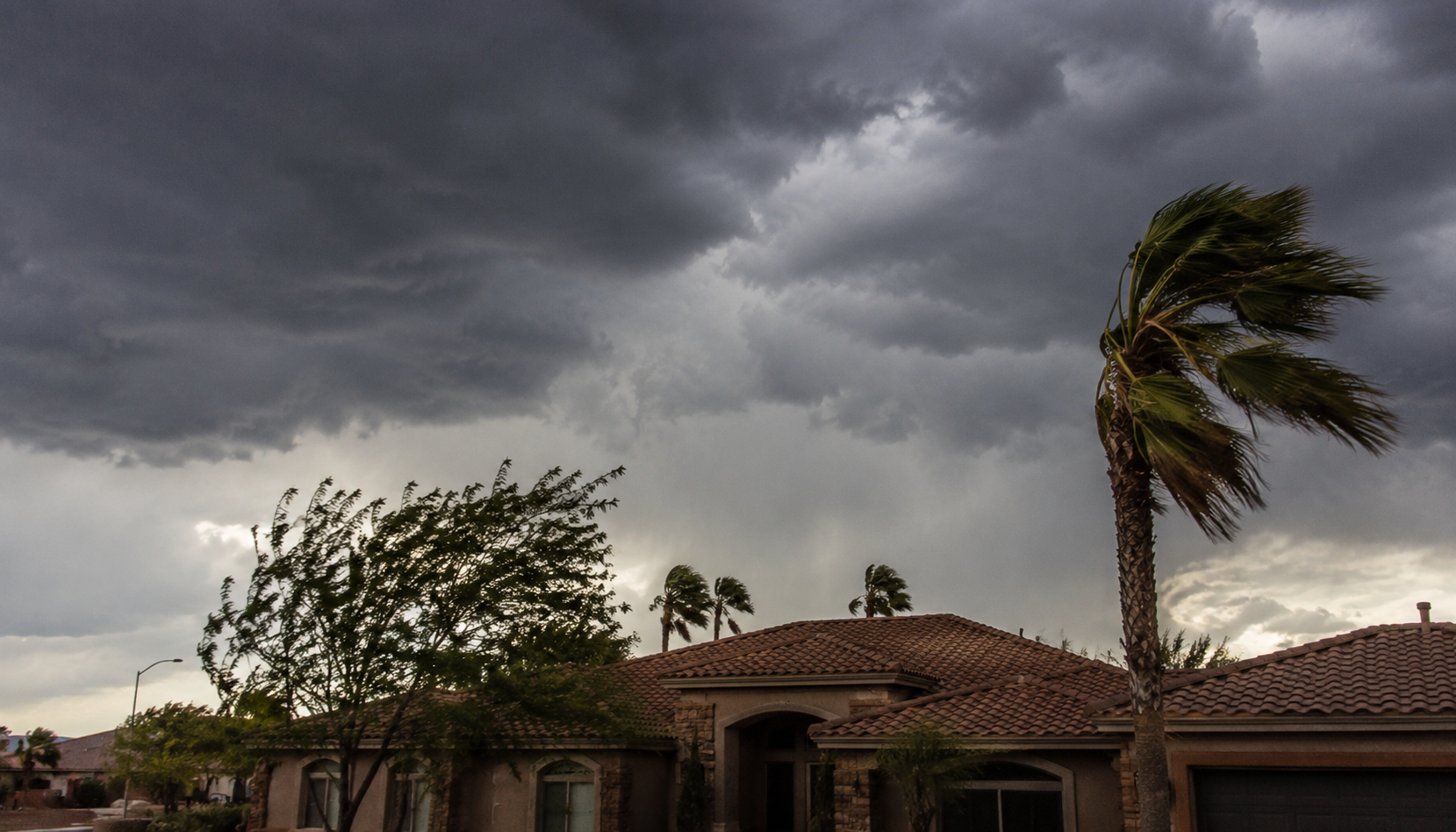
A monsoon storm in the valley is as much a wind event as a rain event. The rain gets the attention. The wind does the quiet damage. Gusts drive the water sideways, up under roof tiles, around flashing and vents, past the edge of a window, into all the places a roof is built to shed water from the top down and not the side in.
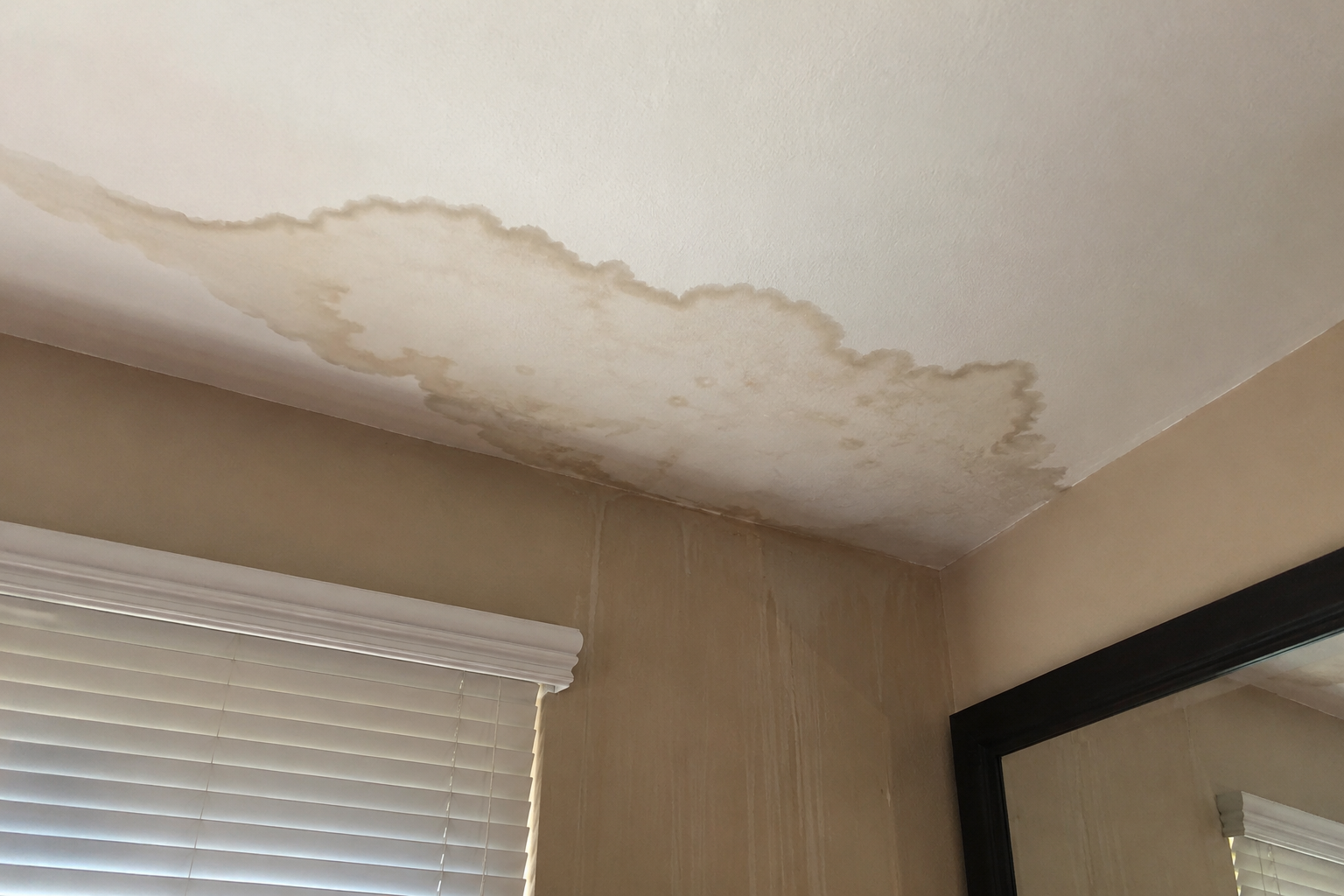
You usually do not see it that night. You see it a day or two later. A brown ring on the ceiling. A soft spot in the drywall. A damp smell in a closet that backs up to an outside wall. That is the storm, showing up late.
Why Las Vegas roofs lose to the wind
There is a reason this hits harder than the rain totals suggest. The sun runs the rest of the year, and it is brutal on a roof. Tile, shingle, sealant, and flashing all dry out, crack, and lift over years of that heat, so by the time the storms arrive a lot of roofs already carry weak spots. The wind does not create the opening so much as find it. Then it pushes. Gusts can reach 60 miles an hour in a strong cell, and at that point rain is not falling, it is getting driven.
Where the water actually gets in
The entry points are rarely dramatic. Around roof penetrations, the vents, the swamp cooler curb, a skylight. Under a lifted tile or shingle. Through worn flashing in a roof valley or where the roof meets a wall. Around a window or door the wind is hitting straight on. Once the water is past the surface it travels along the framing and surfaces somewhere that has little to do with where it came in, which is why chasing the stain almost never finds the leak.
What to do when you find it
Get photos and a short video before anyone touches anything. The stain, the room, the ceiling. That record carries your insurance claim more than anything you tell the adjuster later.
If water is actively coming in and you can reach it safely, slow it down. A bucket under the drip, a tarp over the spot if you can place one without climbing into the weather. Stay off a wet roof.
Then call, and do not wait for it to dry on its own. In summer heat, mold can start inside in two days, and a small ceiling stain becomes removed drywall and a mold job faster than people expect.
One more thing, because it is the genuinely dangerous part of these storms. Do not drive or walk into moving water. Six inches can take a person off their feet and a foot of it can move a car. The wet ceiling can wait. That cannot.
Storm damage or flood, and why your claim depends on it
This is where storm damage and flooding part ways, and the difference decides your coverage. Wind-driven rain that gets in because the storm damaged your roof or your home is often covered by a standard homeowners policy, because the cause is the wind. Water that rises from outside and comes in at ground level, flash runoff or a wash that overflows, is usually treated as a flood, and flood is typically excluded from homeowners and needs a separate flood policy. The coverage turns on how the water got in. That is exactly why documenting it from the first hour matters. Read your policy or call your carrier so you know which side of that line you are on.
When we work a storm job, we find and document how the water got in, lay out the scope, and price it in Xactimate, the same software your adjuster works in. That is most of what we mean when we say we fight for your claim. And if anyone hands you an Assignment of Benefits to sign, us included, read it first. It can sign your claim rights over to a contractor, and you deserve to know that before you initial it.
What we do once we are there
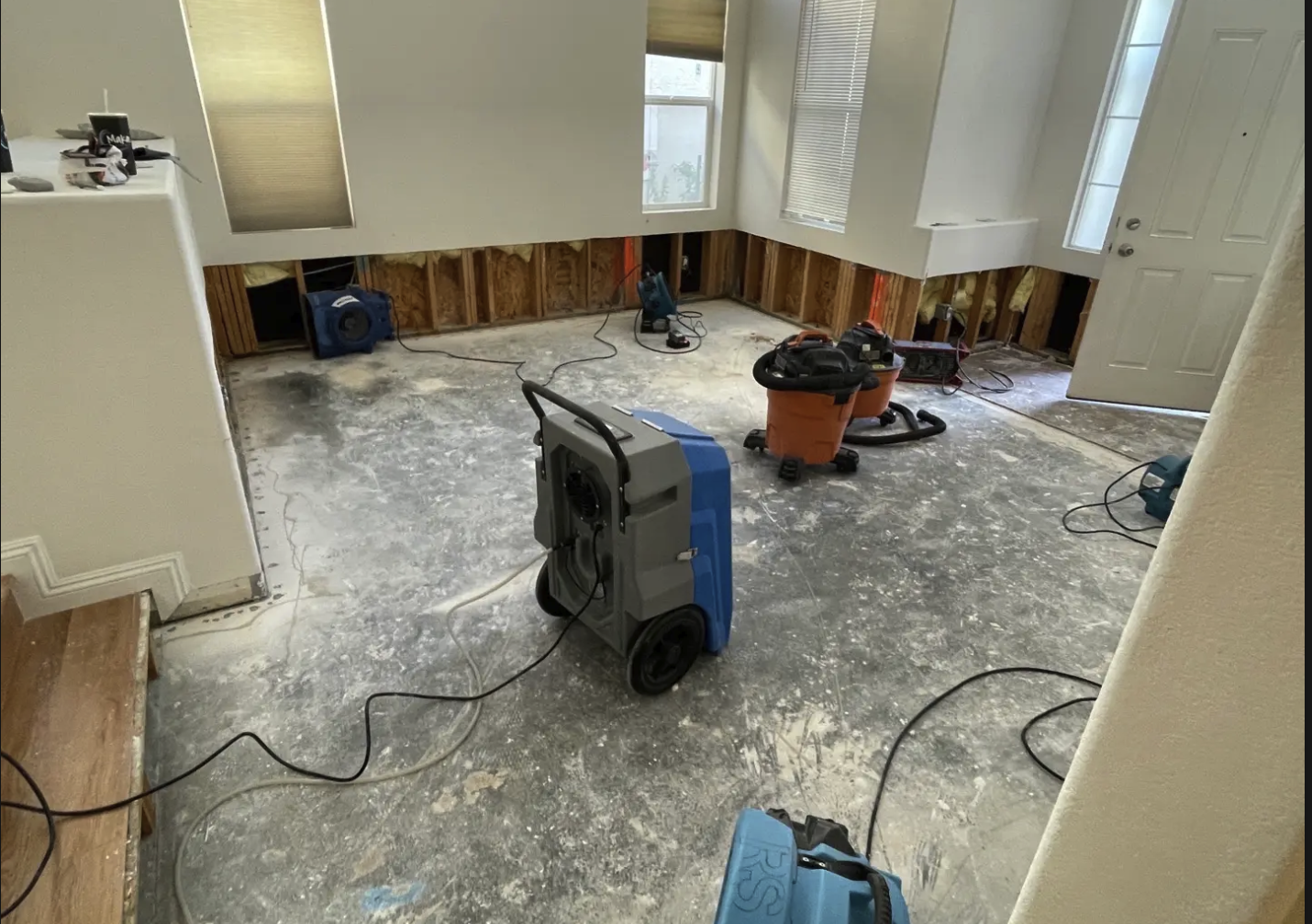
On our end the work is straightforward, it is just methodical. We trace the water back to where it actually got in, which is usually not where the stain is. We dry the structure with equipment and confirm it with moisture meters, not by eye. What cannot be saved comes out, and what got wet gets handled before mold does. You get one person to call the whole way through, and photos every day we are in the house, so you are never guessing where things stand.
We live and work in the valley. The same storm that hit your roof hit ours. If water is coming in, do not wait for a stain, call. And if the stain turns up days later, that is a call too. The sooner we are there, the less of the ceiling has to come down.
702-682-3505
A few common questions
When is monsoon season in Las Vegas? Roughly late June through mid-September. The storms are short, the wind is often the bigger hazard than the rain, and the worst of it is very local.
Will homeowners insurance cover storm water damage? Often yes, when wind-driven rain gets in because the storm damaged the structure, since the cause is the wind. Water that floods in from outside at ground level is usually a separate flood matter that homeowners policies exclude. Check with your carrier, because it turns on how the water got in.
Why did the leak show up far from where the storm hit? Water travels along framing once it is inside, so the stain often appears a room or a floor away from the actual entry point. That is why finding the source takes tracing it back, not just patching the spot.
How fast do I need to act? Quickly. Mold can start within a day or two, and the summer heat speeds it up, so the same-day call is often the difference between drying a ceiling and rebuilding one.
By Dominick Panzarella, Owner-Operator and IICRC-Certified Restoration Specialist, Rockstar Restoration LV.
About Rockstar Restoration LV
Rockstar Restoration LV is a locally owned, owner-operated restoration company serving Las Vegas and Henderson. We handle water, mold, fire, and smoke damage, and we manage the rebuild through licensed trade partners with one point of contact. We are an IICRC Certified Firm with OSHA-certified technicians and an A+ rating with the Better Business Bureau, and our team brings 30 years of combined experience to the work.
Dominick Panzarella owns the company and runs the work himself. He came up through the restoration trade from the ground up, learned it hands-on, and built a local company on doing the job right. He holds IICRC certifications in water damage restoration and in fire and smoke damage. As the owner-operator, he is the one accountable for the work, not a franchise passing the job down a chain.
Restoring Homes. Restoring Trust. Las Vegas and Henderson. 702-682-3505.
This is general information about storm-related water damage, not insurance or legal advice. Coverage varies, and flood and homeowners policies differ. Confirm the specifics with your carrier.
